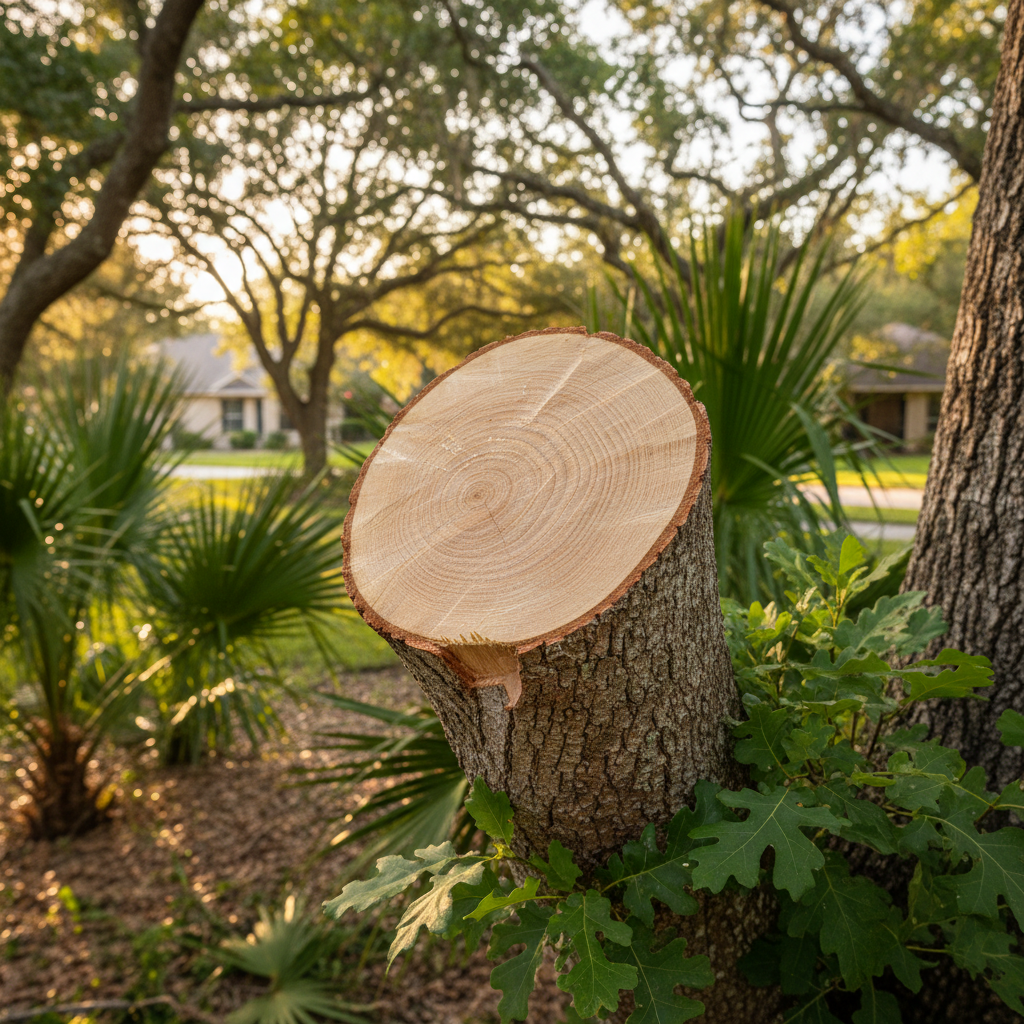
Alright, let's talk about pruning. I see a lot of folks around Clermont, especially in those newer subdivisions with smaller lots, who want to keep their trees looking good and healthy. That's a smart move. Proper pruning isn't just about aesthetics; it's about the tree's health, your safety, and even protecting your home during one of our summer thunderstorms. But there's a right way and a wrong way to do it, and knowing the difference can save you a lot of headache and money.
Before You Even Think About Cutting
First things first, you've got to know your tree. What kind is it? Is it a young oak, a mature maple, or maybe one of those fast-growing laurel oaks that are common around here but can get pretty unruly? Different trees have different pruning needs and ideal times for trimming. Generally, late fall or winter, when a tree is dormant, is a great time for most deciduous trees. For flowering trees, you usually want to prune right after they've finished blooming. If you're not sure, a quick search for your specific tree type will usually give you the answer.
Next, assess the tree's overall health. Are there dead branches? Are branches rubbing together? Is it growing too close to your house, power lines, or blocking a walkway? These are all good reasons to prune. But if the tree looks stressed, diseased, or has significant damage, you might be better off calling a pro straight away. You don't want to make things worse, do you?
Finally, gather your tools. For small jobs, you'll need sharp hand pruners, loppers for branches up to about 1.5 inches thick, and maybe a hand saw for anything a bit larger. Make sure they're clean and sharp. Dull tools tear bark and leave ragged wounds, which is an open invitation for disease. And safety gear is non-negotiable: good gloves, safety glasses, and sturdy shoes. Don't mess around with ladders unless you're absolutely comfortable and it's a very stable, short climb. If you're reaching for a chainsaw, you really need to pause and think if this is a DIY job.
What You Can Realistically Do Yourself
For the average Clermont homeowner, DIY pruning is usually limited to smaller tasks. Think of it as maintenance, not major surgery. Here's what you can generally tackle:
- Removing Dead or Diseased Branches: This is probably the most common and safest DIY task. If a branch is clearly dead (no leaves, brittle, or discolored), cut it back to healthy wood or to the branch collar (that swollen area where the branch meets the trunk or a larger branch).
- Minor Shaping and Thinning: You can remove small branches that are crossing or rubbing, or thin out a few interior branches to improve air circulation and let more light through. This is especially good for fruit trees or shrubs that you want to keep a certain size.
- Sucker and Water Sprout Removal: These are those fast-growing, vertical shoots that pop up from the base of the tree (suckers) or along branches (water sprouts). They don't contribute much to the tree's health and can be easily snipped off with hand pruners.
- Clearance Pruning (Small Branches): If a small branch is just barely touching your roof or a fence, and you can safely reach it from the ground or a very stable step stool, go ahead and trim it back.
Always make clean cuts. Don't leave stubs, and don't cut flush with the trunk. Aim for just outside the branch collar. This allows the tree to heal properly.
When It's Time to Call a Pro (Like Us at Tree Solutions Of Clermont Florida)
Look, I'm all for saving a buck, but some jobs are just too dangerous or complex for a DIY approach. Here's when you absolutely need to pick up the phone and call a professional arborist:
- Any Branch Larger Than 2 Inches in Diameter: If you need a chainsaw, or if the branch is heavy enough to cause damage if it falls incorrectly, it's a job for someone with the right equipment and training.
- Working at Heights: If you need to get on a tall ladder, climb into the tree, or use a pole saw that makes you feel unstable, don't do it. Falls from ladders are no joke, and working with power tools above your head is incredibly risky.
- Proximity to Power Lines: This is a HUGE one. Never, ever prune a tree that's near power lines. Even if you think you're clear, electricity can arc. Call the power company first, then call an arborist.
- Large Dead or Hazardous Branches: A big dead branch hanging over your house or a play area is a ticking time bomb. Removing it safely requires skill, ropes, and sometimes a bucket truck.
- Major Structural Pruning or Tree Health Issues: If your tree needs significant reshaping, has a major split, or you suspect a serious disease or pest infestation, a certified arborist can diagnose the problem and perform the right kind of pruning to save the tree, if possible. They understand tree biology and how to make cuts that promote long-term health, not just short-term aesthetics.
- Trees with Specific Needs: Some trees, like palms, require specialized pruning techniques. You don't want to