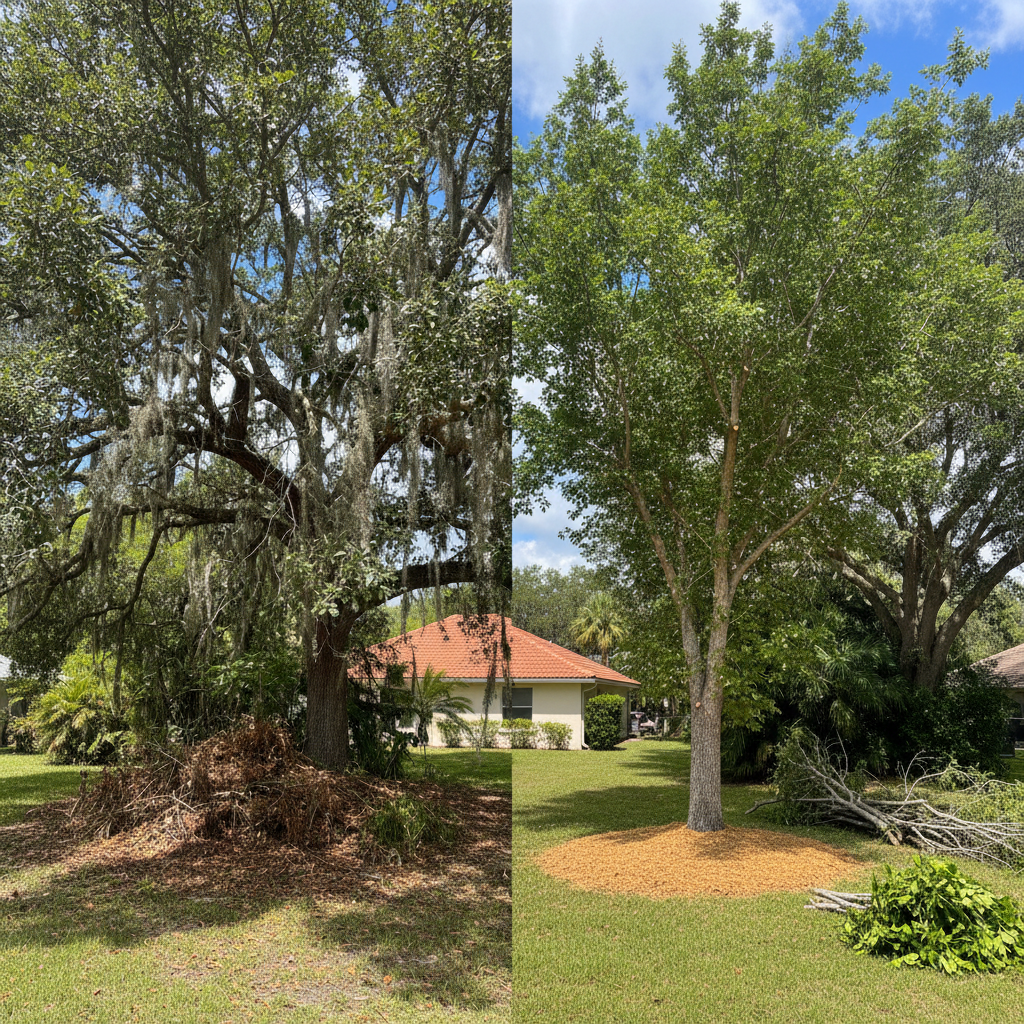
So, you've got trees on your property – that's fantastic. They bring shade, beauty, and can even bump up your home's value. But these trees need some looking after, and when it comes to trimming, homeowners often scratch their heads wondering what the best approach is. Here in Clermont, with our summer storms and sandy soil, it's not just about making things look nice. It's really about keeping everyone safe and ensuring your trees stay healthy for years to come.
I usually see folks considering two main approaches: one is regular, health-focused maintenance trimming, and the other is what I call hazard reduction trimming. Both are crucial, but they serve totally different purposes, and knowing the difference can save you a big headache (and some cash) down the road.
Routine Maintenance Trimming: Playing the Long Game
This is what I typically suggest for most healthy trees. Think of it like taking your car in for a regular check-up or heading to the dentist. It's all about keeping things in good shape, heading off bigger problems, and encouraging healthy growth.
- What's involved: We're talking about taking off branches that are dead, diseased, or just plain weak. We also aim to improve the tree's structure, thin out the canopy to get better air moving through (which really helps prevent fungal issues in our humid climate), and remove any branches that are rubbing or crossing. It's a careful, selective process, with every cut designed to benefit the tree's overall health and how it looks.
- Cost: Generally, this costs less per visit than hazard reduction work. You're not dealing with huge branches or emergency situations, so it's much more predictable. If you keep up with it regularly – say, every 2-3 years for mature trees – it actually keeps costs down over time because you're stopping major problems before they start.
- Durability & Tree Health: This method is amazing for a tree's long-term health. It helps create strong branch connections, cuts down on stress, and makes the tree tougher against pests and diseases. A tree that's well-maintained? That's a durable tree.
- Maintenance: It's an ongoing thing. You can't just do it once and forget about it, right? But the work each time is usually lighter.
- Appearance: A tree that's been properly maintained looks natural, balanced, and simply beautiful. It really boosts your property's curb appeal without looking like someone took a hatchet to it.
Hazard Reduction Trimming: Getting Ready for the Storm
This approach is a bit more aggressive, and we usually do it when there's an immediate worry about safety or potential storm damage. It's not really about making the tree healthier in the long run; it's about cutting down risk right now.
- What's involved: This often means removing bigger, heavier branches that are a direct threat to your home, power lines, or other structures. We might be clearing branches away from your roof or significantly reducing the weight on a limb that looks like it's about to snap. Sometimes, it's about raising the canopy for better clearance. It's less about how pretty the tree looks and more about making things safer.
- Cost: This can get more expensive, especially if we're dealing with large, hard-to-reach branches or need special equipment. It's often reactive, meaning you might be paying for an urgent service.
- Durability & Tree Health: While it definitely reduces immediate danger, it can sometimes be bad for the tree's long-term health if we don't do it super carefully. Aggressive cuts can stress the tree, make it vulnerable to disease, and might even shorten its life. It's a trade-off, really: immediate safety versus potentially compromising the tree's health down the line.
- Maintenance: This isn't a routine job. You do it when a specific hazard pops up or right before a big storm season. After a significant hazard reduction, you might need to keep a closer eye on the tree to make sure it recovers well.
- Appearance: Depending on how much work we had to do, the tree might not look as nice right away. It can look a little "scalped" if we had to remove a lot of material for safety reasons.
So, Which One Should You Pick?
For most homeowners in Clermont, I'd always tell them to start with routine maintenance trimming. It's truly the best way to keep your trees healthy, looking good, and naturally tough against our Florida weather. When a tree is strong and well-structured, it's way less likely to become a hazard in the first place.
However, there are definitely times when hazard reduction is absolutely essential. If you've got a massive oak branch hanging precariously over your kid's bedroom, you don't wait around for routine maintenance. You call someone like Tree Solutions Of Clermont Florida to get that taken care of safely and quickly. Same goes for trees that are too close to power lines, especially in older neighborhoods like those around Lake Minneola with their mature, sprawling trees.
The main thing is to be proactive. Don't wait until a hurricane warning to start thinking about your trees. Get them on a regular trimming schedule. This way, you're investing in the long-term health and safety of your property, instead of just scrambling to fix problems as they pop up. A little planning goes a long way, particularly when it comes to the big, beautiful trees we all love here in Central Florida.