Topping vs. Proper Pruning: What Your Clermont Trees Really Need
You've got trees on your property, right? Maybe they're starting to look a little overgrown, or you're already thinking ahead to hurricane season. So you figure, "time to trim them back." That's a smart thought, but *how* you trim them makes all the difference in the world. I've seen it countless times here in Clermont: folks trying to save a buck or just not knowing any better, and they end up topping their trees. Let me tell you, that's almost always a terrible idea, especially considering our Florida climate.
What's the Difference Anyway?
Let's break it down simply. When people talk about cutting back a tree, you're generally looking at two main approaches:
- Topping: This happens when someone cuts big branches back to stubs, often right between lateral branches, without really thinking about how the tree naturally grows. It usually leaves a bunch of short, ugly stumps sticking up. It's quick, it looks dramatic, and it seems cheap at first.
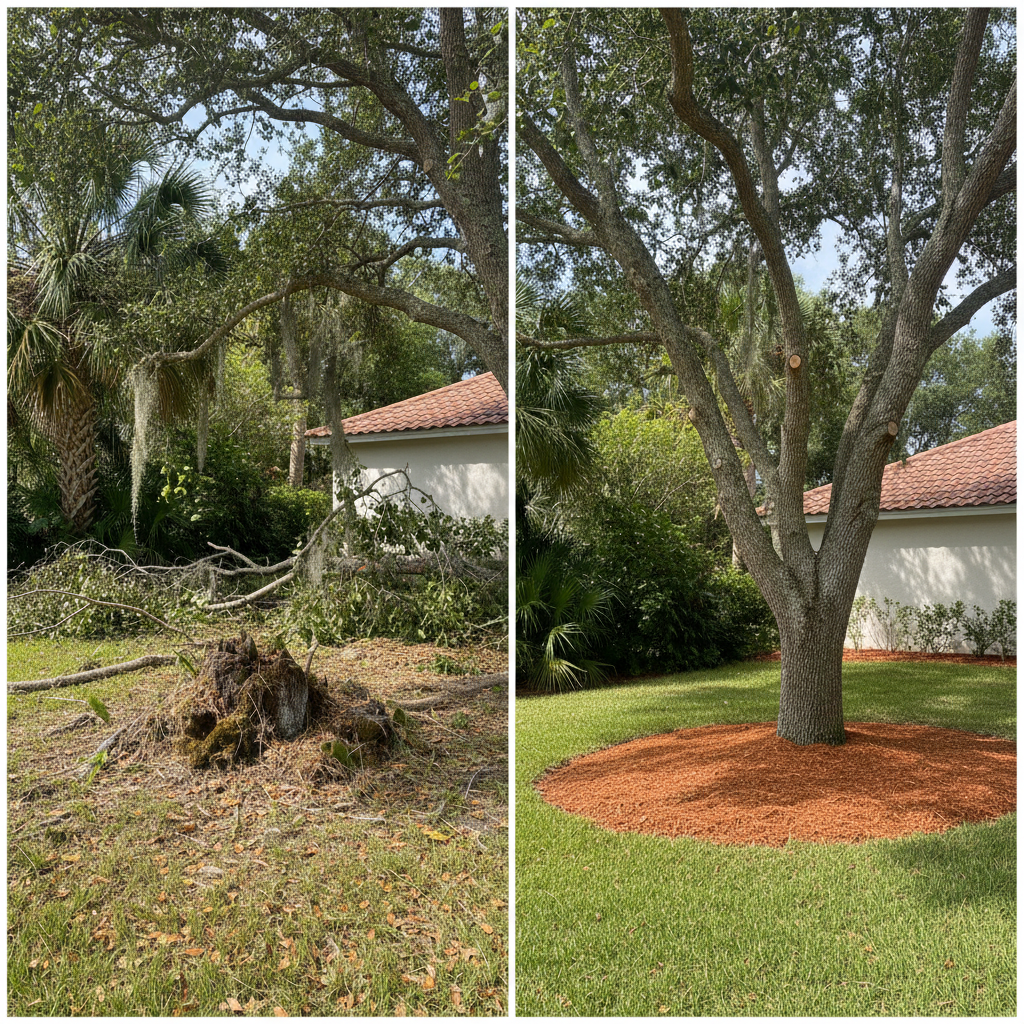
- Proper Pruning (or Structural Pruning): This means carefully removing specific branches to make the tree healthier, stronger, and better looking. You're cutting back to a lateral branch that's at least one-third the size of the branch you're taking off, or to the branch collar. It's all about thinning things out, raising the canopy, or safely reducing certain branches.
Cost: The Upfront vs. Long-Term Reality
Okay, let's talk money, because that's usually where people get tripped up. Topping almost always costs less initially. Someone with a chainsaw can come in, hack off the tops of your trees in a few hours, and charge you less than a professional arborist would for a good pruning job. Sounds like a win, right?
Wrong. That initial saving is a total illusion. When you top a tree, it goes into shock. It tries to recover by sending out dozens of weak, super-fast-growing shoots from those stub cuts. These are called 'water sprouts' or 'epicormic growth.' They're barely attached, grow like crazy, and are incredibly likely to break in a strong wind or hurricane. So, within a year or two, you're paying again to have those removed, or worse, dealing with storm damage. Plus, a topped tree is often stressed, which makes it more vulnerable to pests and diseases. That can lead to even more costs down the line, or even mean you have to remove the whole tree.
Proper pruning costs more upfront because it takes skill, a real understanding of tree biology, and more time. But because it encourages healthy, strong growth, you won't need maintenance as often, and your tree will be much tougher. It's an investment, really, not an expense.
Durability: Built to Last vs. Built to Fail
This is where proper pruning really shines, especially here in Florida. Our strong summer storms and occasional hurricanes mean a tree's durability isn't just about how it looks; it's about safety and protecting your home. A properly pruned tree has a strong, balanced structure. Its branches are healthy, well-spaced, and have good attachment points. They can flex and stand up to high winds much better.
A topped tree? Those water sprouts are like toothpicks trying to hold up a house. They aren't properly integrated into the tree's structure. They'll snap, tear, and become dangerous projectiles in a storm. I've seen countless trees in neighborhoods like Kings Ridge or over by Lake Minneola that were topped, and after a good blow, they look like they've been through a blender. They're a liability, plain and simple.
Maintenance: A Little Now, or a Lot Later
With proper pruning, your tree grows predictably and healthily. You might need to prune every few years, depending on the tree species and how fast it grows, just to keep its shape, remove deadwood, or thin the canopy. It's just routine maintenance.
Topped trees? They become a high-maintenance nightmare. Those water sprouts grow back incredibly fast and thick. You'll be needing to 're-top' or 'clean out' those weak growths annually or even twice a year, which means more money out of your pocket, year after year. It's a vicious cycle that ultimately weakens the tree even more.
Appearance: Beauty vs. Ugliness
Let's be honest, a properly pruned tree is beautiful. It keeps its natural form, has a strong canopy, and really adds to your property's curb appeal. It looks healthy and vibrant. It's an asset.
A topped tree, on the other hand, is just plain ugly. It looks mutilated, disfigured, and totally unnatural. Sometimes it's called 'lion-tailing' when all the inner branches are stripped, leaving only little tufts at the ends. It's a clear sign of poor tree care and it actually lowers your property value. Nobody wants a tree that looks like it's been scalped, do they?
My Recommendation for Clermont Homeowners
There's really no contest here. For the health of your trees, the safety of your property, and your long-term budget, always go with proper pruning. It's the only way to make sure your trees are strong, beautiful, and resilient enough to handle our unique Florida weather, from the intense summer sun to those unpredictable hurricane winds.
If you're unsure, or if you've got a tree that's been topped in the past and you want to try to save it, give us a call at Tree Solutions Of Clermont Florida. We can assess your trees and recommend a plan that makes sense for your specific situation. Don't fall for the cheap, quick fix; it'll only cost you more in the end.